Introduction
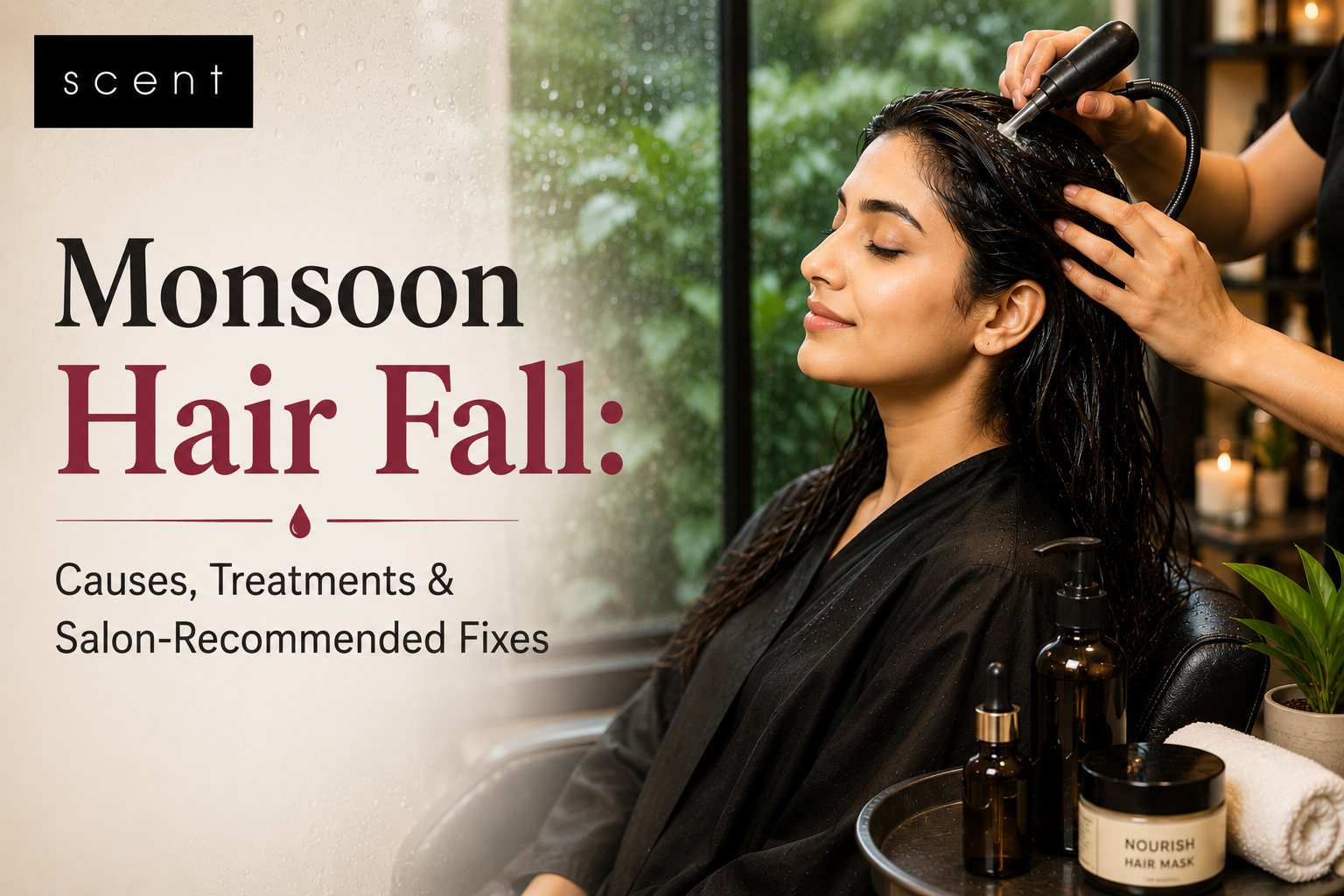
The first rains of the season bring relief from the heat — and, for most of us, a fistful of hair on the pillow every morning. Monsoon hair fall is one of the most common seasonal hair concerns in India, and Bangalore’s humid, on-and-off rainy climate makes it worse. If you’ve noticed more strands in your brush, on your shoulders, or clogging the shower drain since the rains started, you’re not imagining it.
The good news: monsoon hair fall is almost always temporary and very treatable once you understand what’s actually causing it. In this guide, we’ll break down the real monsoon hair fall causes, simple at-home fixes, and the salon recommended hair treatments that professional stylists actually use to bring shedding under control — fast.
Whether you’re dealing with a mild seasonal increase or a more noticeable thinning, the strategies below are designed to be practical — things you can start today, alongside longer-term care that keeps your scalp resilient well past the rainy months.
Table of Contents
- Why Monsoon Triggers Hair Fall
- Top 5 Causes of Monsoon Hair Fall
- Infographic: Causes & Quick Fixes
- Effective Treatments for Monsoon Hair Fall
- Salon-Recommended Fixes from Bangalore’s Experts
- Hair Spa & Scalp Care Tips for Sahakar Nagar Residents
- FAQs
- Conclusion
Why Monsoon Triggers Hair Fall
Hair naturally sheds in cycles, but humidity, rainwater, and reduced sunlight during monsoon accelerate the process. Increased moisture in the air causes the scalp to sweat more, while frequent rain exposure strips natural oils and disturbs the scalp’s pH balance. Add reduced appetite, digestive changes, and higher stress that many people experience in this season, and hair follicles simply become weaker for a few months.
The Follicle Stress Connection
Every strand goes through growth, rest, and shedding phases. Environmental stress — like sudden humidity spikes or fungal buildup — can push more follicles into the shedding phase at once, which is why monsoon hair fall often feels sudden and dramatic rather than gradual.
Weather changes also affect blood circulation to the scalp and can trigger mild stress responses in the body, both of which are known to influence the hair growth cycle. This is why many people notice hair fall spiking specifically in the first few weeks of monsoon, before the body and scalp adjust to the new humidity levels.
Top 5 Causes of Monsoon Hair Fall
Understanding monsoon hair fall causes is the first step to fixing them.
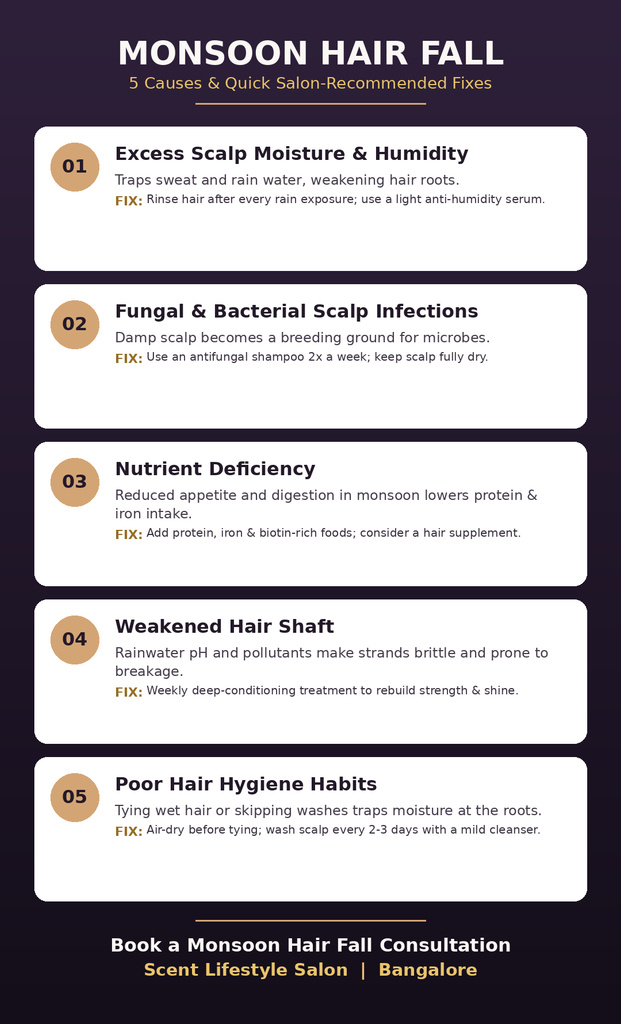
1. Excess Scalp Moisture & Humidity
Damp hair left tied or covered traps moisture against the scalp, weakening the root and making strands more likely to snap or fall out.
2. Fungal & Bacterial Scalp Infections
A consistently moist scalp is the perfect breeding ground for fungal infections like dandruff-causing Malassezia, which directly contributes to itching, flaking, and hair fall.
3. Nutrient Deficiency
Reduced appetite, more fried and comfort food, and slower digestion during monsoon often mean less protein, iron, and biotin reaching the hair follicles — all essential for strong hair growth.
4. Weakened Hair Shaft
Rainwater carries pollutants and has an altered pH compared to regular water, which roughens the hair cuticle and makes strands brittle, dry, and prone to breakage.
5. Poor Hair Hygiene Habits
Tying up wet hair, skipping regular washes to “avoid the rain,” or over-washing to feel clean can both backfire, disturbing the scalp’s natural balance.
📊 Infographic: Monsoon Hair Fall Causes & Quick Fixes
Effective Treatments for Monsoon Hair Fall
Once you know the cause, treatment becomes much simpler. Here’s a combined hair fall treatment monsoon routine that works both at home and in a salon setting.
At-Home Care Routine
- Wash smart, not more: Cleanse your scalp every 2–3 days with a mild, sulfate-free shampoo rather than skipping washes altogether.
- Always dry before tying: Air-dry or blow-dry on a cool setting before tying hair up, especially after getting caught in the rain.
- Rinse after rain exposure: A quick rinse with clean water removes pollutants and acidic rainwater residue from the scalp.
- Add protein & iron to your plate: Eggs, lentils, leafy greens, and nuts support hair strength from within — this is one of the most overlooked monsoon hair care tips.
- Use a leave-in anti-humidity serum: This controls frizz and prevents moisture-related root weakening.
Professional Salon Treatments
Some things are hard to fix with home remedies alone — this is where salon recommended hair treatments make a real difference:
- Scalp detox treatments to clear product buildup, sweat, and fungal residue
- Deep-conditioning and protein-repair masks to rebuild the hair shaft (we cover this in detail in our post on deep conditioning treatment for damaged hair)
- Anti-hair fall scalp serums and mesotherapy for targeted follicle stimulation
- Trichologist consultations to rule out underlying issues like thyroid imbalance or severe deficiency — explored further in our guide to hair fall causes and solutions
If your hair fall feels heavier than usual this season, a professional scalp analysis can save months of guesswork.
👉 Ready to get your scalp checked? Book an appointment at Scent Lifestyle Salon for a free monsoon scalp analysis.
Salon-Recommended Fixes from Bangalore’s Experts
Why Choose a Professional Salon This Monsoon
Humidity affects everyone differently depending on scalp type, hair texture, and existing hair history (colour, keratin treatments, chemical processes). A trained stylist can customise a scalp care during monsoon plan instead of a one-size-fits-all approach — something no home remedy can replicate.
Salon-grade tools also make a measurable difference. Steam-assisted deep conditioning, for instance, opens the hair cuticle enough for treatments to actually penetrate the shaft, rather than sitting on the surface the way most at-home masks do. Similarly, scalp analysis using a digital microscope can flag early-stage thinning or fungal activity long before it becomes visible to the naked eye — giving you a real head start on treatment.
Best Beauty Salon in Bangalore for Hair Fall Treatment
If you’re searching for the best beauty salon in Bangalore to address seasonal hair fall, look for one that offers scalp diagnostics, dermatologist-backed products, and treatments tailored to monsoon-specific damage rather than generic spa packages. A good salon will assess your scalp condition first and recommend a treatment plan — not just sell you a service.
Hair Spa & Scalp Care Tips for Sahakar Nagar Residents
Monsoon is exactly when a hair spa proves its worth — it deep-cleanses the scalp, replenishes lost moisture in a controlled way, and strengthens roots weakened by humidity and rain exposure. If you live around Sahakar Nagar and are looking for the best hair spa in Sahakar Nagar, Bangalore, choose one that starts with a scalp analysis rather than a generic package, and follows up with anti-fungal cleansing, steam-assisted conditioning, and a root-strengthening serum — so your hair stays healthy and full through the season.
FAQs
Q1. Is monsoon hair fall normal, or should I be worried? A. Mild to moderate increased shedding during monsoon is common and usually resolves once humidity levels stabilise. If hair fall continues beyond the season or you notice visible thinning, consult a trichologist.
Q2. How much hair fall is considered normal per day? A. Losing 50–100 strands a day is considered normal. During monsoon, this can temporarily rise, but a sustained increase beyond that warrants professional attention.
Q3. Can oiling help reduce monsoon hair fall? A. Light oiling before a wash can help nourish the scalp, but leaving oil on for too long in humid weather can attract dirt and worsen fungal buildup. Balance is key.
Q4. How often should I get a salon hair fall treatment during monsoon? A. Most trichologists recommend a professional scalp treatment every 3–4 weeks during peak monsoon months for visible results.
Q5. Does hair colour make monsoon hair fall worse? A. Colour itself doesn’t cause hair fall, but combined with humidity and rain exposure, it can weaken already porous, chemically treated strands — making protective aftercare essential.
Conclusion
Monsoon hair fall can feel alarming, but it’s one of the most manageable seasonal hair concerns once you address the root causes — humidity, scalp hygiene, nutrition, and hair shaft strength. A consistent at-home routine paired with the right salon recommended hair treatments can noticeably reduce shedding within a few weeks.
Don’t wait for the shedding to get worse before taking action. Book your appointment today with our hair specialists and walk into the next rainy season with a healthier, stronger scalp.