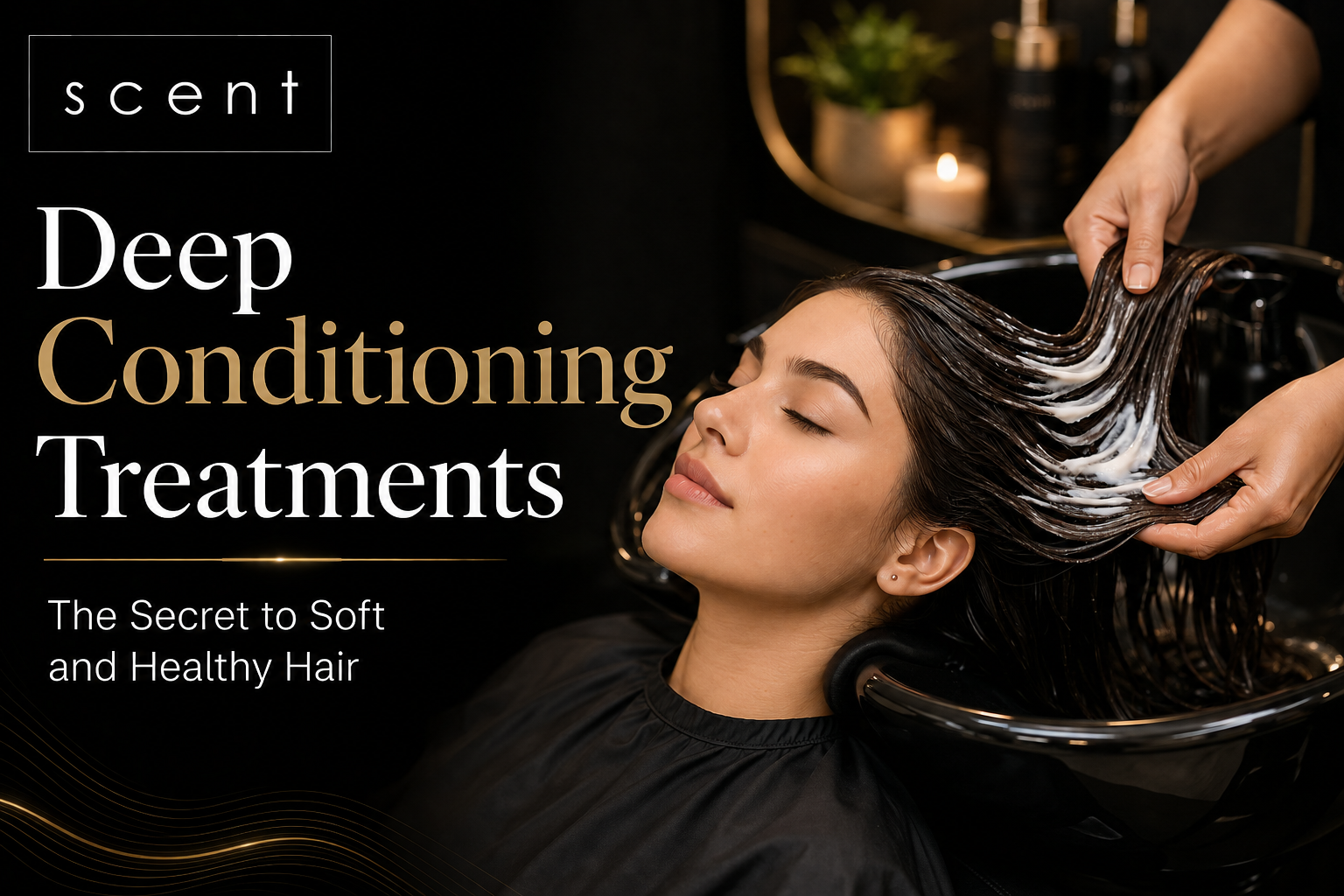
If your hair feels rough, frizzy, or lifeless no matter how much you moisturize, the problem might not be your shampoo — it’s what happens after. A Deep Conditioning Treatments goes far beyond a regular conditioner, penetrating the hair shaft to repair damage from the inside out rather than just coating the surface.
In this guide, we’ll explain how deep conditioning works, why it’s essential for Dry Hair, how it supports Hair Repair, and what to expect from a professional Hair Spa in Bangalore. We’ll also cover the best Hair Mask for Dry Hair options, how to spot signs of Damaged Hair Treatment needs, and how to build a lasting Healthy Hair Care Routine. If you’re nearby, you’ll find details on booking a session at our Salon in Sahakar Nagar, Bangalore at the end of this guide.
Table of Contents
- What Is a Deep Conditioning Treatment?
- Signs Your Hair Needs Deep Conditioning
- How Deep Conditioning Repairs Dry and Damaged Hair
- Deep Conditioning vs Regular Conditioner
- What to Expect at a Professional Hair Spa
- Building a Healthy Hair Care Routine at Home
- How Often Should You Deep Condition?
- Key Benefits of Regular Deep Conditioning
- Common Mistakes to Avoid
- Visit Us: Hair Spa in Sahakar Nagar, Bangalore
- Conclusion
- FAQs
What Is a Deep Conditioning Treatment?
A deep conditioning treatment is an intensive hair care process that uses concentrated formulas rich in proteins, oils, and moisturizing agents to penetrate deep into the hair cuticle. Unlike regular conditioners that sit on the surface for a few minutes, deep conditioning treatments are left on longer — often with heat — allowing active ingredients to restore strength and elasticity from within.
This process is especially effective for anyone dealing with dry hair, chemically treated strands, or hair that’s been exposed to excessive heat styling or environmental stress.
Signs Your Hair Needs Deep Conditioning
Not sure if your hair needs this extra step? Watch for these common signs:
- Hair feels rough or straw-like to the touch
- Frequent split ends and breakage
- Dullness or lack of natural shine
- Difficulty detangling, especially after washing
- Hair that absorbs product quickly but still feels dry
- Visible frizz that doesn’t calm down with regular styling products
If two or more of these sound familiar, your hair is likely due for a deep conditioning session.
How Deep Conditioning Repairs Dry and Damaged Hair
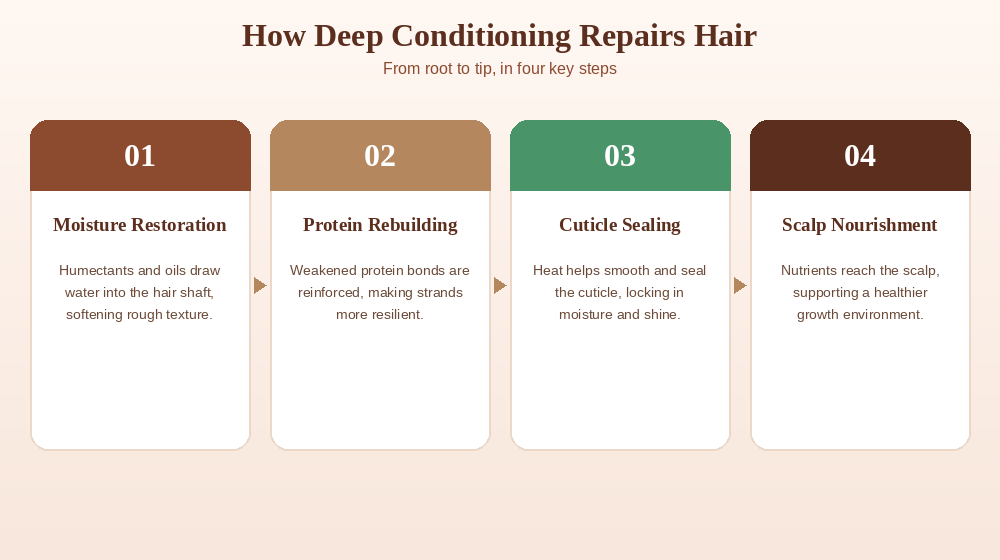
Dry hair typically lacks both moisture and protein — two things a good deep conditioning treatment restores in balance. Here’s how the process supports hair repair:
Moisture Restoration
Deep conditioners are formulated with humectants and oils that draw moisture into the hair shaft, softening rough texture and reducing frizz.
Protein Rebuilding
Damaged hair often has weakened protein bonds. Treatments infused with proteins help rebuild these bonds, making strands more resilient to breakage.
Cuticle Sealing
Heat-assisted treatments help smooth and seal the hair cuticle, locking in moisture and giving hair a smoother, shinier appearance.
Scalp Nourishment
Many treatments also nourish the scalp, which indirectly supports healthier hair growth over time.
Deep Conditioning vs Regular Conditioner
It’s easy to confuse the two, but they serve very different purposes:
| Factor | Regular Conditioner | Deep Conditioning Treatment |
|---|---|---|
| Application time | 2–3 minutes | 15–30 minutes (often with heat) |
| Penetration | Surface-level | Penetrates the hair shaft |
| Best for | Daily maintenance | Dry, damaged, or chemically treated hair |
| Frequency | Every wash | Weekly to bi-weekly |
| Results | Temporary softness | Long-term strength and repair |
Regular conditioner keeps hair manageable day to day, but a deep conditioning treatment is what actually reverses damage and restores health over time.
What to Expect at a Professional Hair Spa
Booking a hair spa in Bangalore for deep conditioning typically includes more than just a hair mask application. A full session usually involves:
- Scalp analysis to understand your hair type and specific concerns
- Pre-treatment cleansing to remove product buildup
- Application of a customized deep conditioning mask suited to your hair’s needs
- Steam or heat therapy to help the treatment penetrate more effectively
- Scalp massage to boost circulation and relaxation
- Rinse and finishing with a cool water rinse to seal the cuticle
Professional treatments use higher-grade formulas and heat tools that are difficult to replicate at home, which is why salon sessions often deliver more noticeable, longer-lasting results.
Building a Healthy Hair Care Routine at Home
Between salon visits, maintaining your results depends on a consistent routine. Here are a few essentials:
- Use a weekly hair mask for dry hair to keep moisture levels topped up between professional treatments.
- Avoid over-washing, since frequent washing strips natural oils and worsens dryness.
- Apply a leave-in conditioner or hair oil on damp hair to seal in moisture.
- Reduce heat styling frequency, or always use a heat protectant when styling.
- Trim regularly to prevent split ends from traveling further up the hair shaft.
- Protect hair from sun and chlorine exposure, which can accelerate dryness and damage.
A good at-home routine, combined with periodic professional treatments, is the most effective way to keep hair consistently soft and healthy.
How Often Should You Deep Condition?
The right frequency depends on your hair type and condition:
- Normal hair: Once every 2–3 weeks is usually enough to maintain softness.
- Dry or frizzy hair: Weekly treatments help keep moisture levels balanced.
- Chemically treated or heat-damaged hair: Weekly to bi-weekly sessions are recommended until hair health visibly improves.
- Fine or oily hair: Every 3–4 weeks, focusing mainly on the ends to avoid weighing hair down.
If you’re unsure where you fall, a quick consultation with a stylist can help you build a treatment schedule suited to your specific hair type.
Key Benefits of Regular Deep Conditioning
Beyond simply softening hair, consistent deep conditioning treatments offer a range of long-term benefits:
- Improved elasticity: Well-conditioned hair stretches slightly under tension instead of snapping, reducing breakage during styling or brushing.
- Reduced frizz: Sealed cuticles mean less moisture loss throughout the day, keeping humidity-related frizz under control.
- Stronger color retention: For color-treated hair, deep conditioning helps lock in pigment for longer, reducing fading between salon visits.
- Healthier-looking growth: While it doesn’t directly speed up growth, healthier strands are less likely to break off, so hair appears to grow longer over time.
- Better response to styling: Well-hydrated hair holds curls, blowouts, and other styles more effectively than dry, brittle strands.
These benefits compound over time, which is why a single treatment often isn’t enough — consistency is what delivers visible, lasting change.
Common Mistakes to Avoid
Even with good intentions, a few common habits can reduce the effectiveness of your deep conditioning routine:
- Applying treatment to the scalp only: Focus mid-lengths to ends, where hair is oldest and most damaged, rather than concentrating product at the roots.
- Rinsing with hot water: Finish with cool water to help seal the cuticle and lock in moisture instead of leaving it open.
- Skipping heat when recommended: Some treatments are specifically designed to work with steam or heat — skipping this step reduces how deeply the product can penetrate.
- Over-treating fine hair: Too frequent deep conditioning on fine or oily hair can leave it looking flat and weighed down rather than healthy.
- Using the wrong formula for your hair type: A moisture-focused mask won’t fix protein damage, and vice versa — matching the treatment to your hair’s actual needs matters.
Avoiding these mistakes ensures you get the full benefit of every treatment, whether it’s done at home or during a professional hair spa session.
Visit Us: Hair Spa in Sahakar Nagar, Bangalore
Looking for a reliable hair spa in Bangalore to repair dry or damaged hair? At Scent Salon, our deep conditioning treatments are customized to your hair type, using professional-grade products and steam therapy for lasting results. Whether your hair needs a quick moisture boost or intensive repair, our team is here to help you get it looking and feeling its best.
Conclusion
Soft, healthy hair rarely happens by accident — it’s the result of consistent care that goes beyond a basic wash-and-condition routine. A deep conditioning treatment addresses the root causes of dryness and damage, restoring moisture, strength, and shine in ways regular conditioner simply can’t match.
Whether you’re dealing with dry hair, damage from styling, or just want to maintain healthy hair care routine habits, regular deep conditioning — paired with the right at-home care — will keep your hair looking its best all year round.
📅 Book Your Appointment
FAQs
What does a deep conditioning treatment do for hair?
It penetrates the hair shaft to restore moisture and protein balance, repairing dryness, reducing frizz, and improving overall softness and shine.
How is deep conditioning different from a regular hair mask?
Deep conditioning treatments are typically more intensive, often applied with heat or steam for longer periods, allowing deeper penetration than a standard at-home hair mask.
Can deep conditioning fix already damaged hair?
It significantly improves the look and feel of damaged hair by restoring moisture and strength, though severely damaged ends may still require trimming for the best results.
How long should I leave a deep conditioning treatment on?
Most treatments are left on for 15–30 minutes, though professional salon treatments with steam may extend this slightly for deeper results.
Is deep conditioning suitable for oily hair?
Yes, but it should be applied mainly to the mid-lengths and ends rather than the scalp, and used less frequently to avoid weighing hair down.
How soon will I see results from deep conditioning?
Many people notice softer, smoother hair immediately after one session, with continued improvement in strength and shine after 3–4 regular treatments.
Where can I book a professional hair spa near Sahakar Nagar, Bangalore?
Scent Salon in Sahakar Nagar, Bangalore offers professional deep conditioning treatments and hair spa services. You can book an appointment by phone, WhatsApp, or through our website.
Looking for more hair care tips? Explore our other blogs on hair fall solutions, threading vs waxing, and seasonal hair care routines.